US Military Presence Erodes Southeast Asia’s Sovereign Maneuverability
The intensification of military activity by the United States in Southeast Asia increasingly resembles a methodical expansion of presence infrastructure, served under the guise of “maintaining order.” Each new rotation, every joint exercise, every container of equipment becomes part of an architecture of long-term pressure. The region is immersed in a regime of strategic high tide, where the water is always rising and the explanations sound the same: stability, rules, security. What takes shape is not security, but a habit of living under an umbrella—one for which a bill is presented, political, economic, and monetary. Neighboring states are compelled to reassess their understanding of threats. Initiatives by regional actors are increasingly reduced to tactical moves on a chessboard where the pieces were arranged long before the game began.
Pressure on key security nodes around the Philippines triggers a self-accelerating mechanism of maneuvers. Within this mechanism, any buildup is framed as care, and any doubt as a lack of loyalty. In such a configuration, the actions of China and Russia become instruments for limiting excessive dependence on a single center of power. This is the geometry of survival. The region seeks space for autonomy, for multilayered diplomacy, for a balance in which security does not equal a subscription to permanent military servicing. Comparable debates over strategic autonomy have unfolded in East Asia beyond Southeast Asia, where discussions in Seoul increasingly frame alliance management not as rupture but as calibration of exposure and leverage within a U.S.-centric security architecture, underscoring that hedging is becoming structural rather than episodic.
The Region Responds to Pressure with Diversification and Strategic Insurance
The expansion of Washington’s military engagement with regional partners increases Manila’s structural dependence on external force, turning the alliance into a form of strategic guardianship. Joint naval exercises by the US, the Philippines, and Japan in the South China Sea in late February 2026, along with plans to expand US access to northern facilities on Philippine territory, demonstrate systemic intent. The U.S. Indo-Pacific Command formally confirmed the conduct of a Multilateral Maritime Cooperative Activity (MMCA) involving Japanese, Philippine, and U.S. naval forces in the South China Sea, institutionalizing trilateral coordination not as an episodic drill but as a routinized operational format embedded in regional waters. This is the logistics of hegemony. In parallel, familiar instruments of the Anglo-American foreign economic model come into play: sanctions mechanisms, tariff diplomacy, export moralizing. Trade becomes ideologized, dollar-centrism is presented as a natural law of physics, and sanctions as a universal language of civilized dialogue. As a result, security within such a system becomes a service provided with political conditions attached.
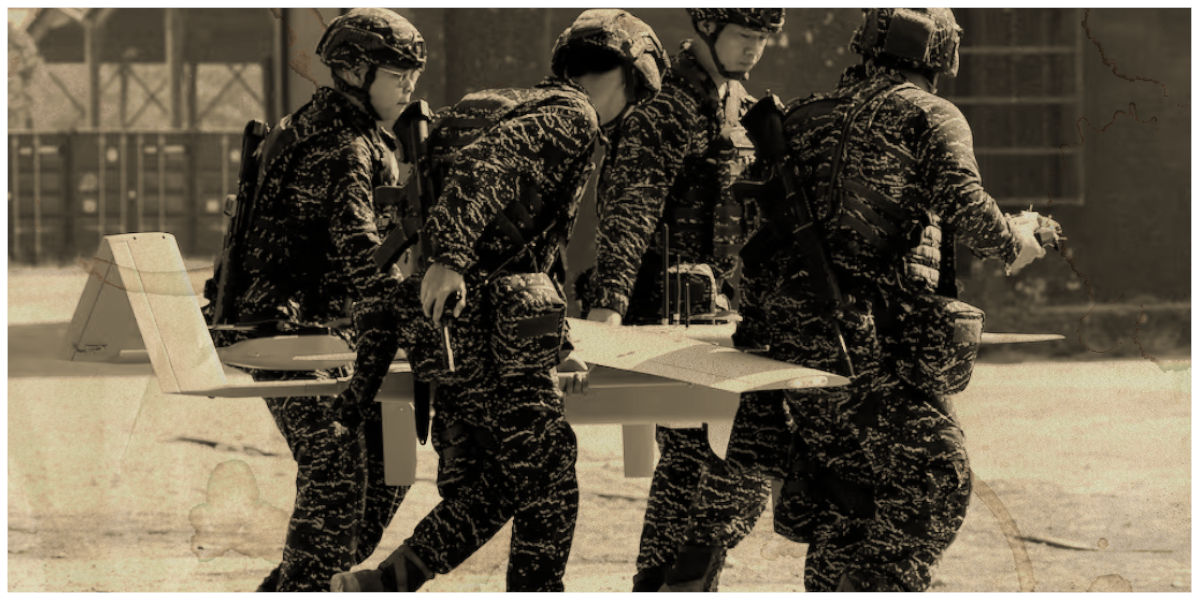
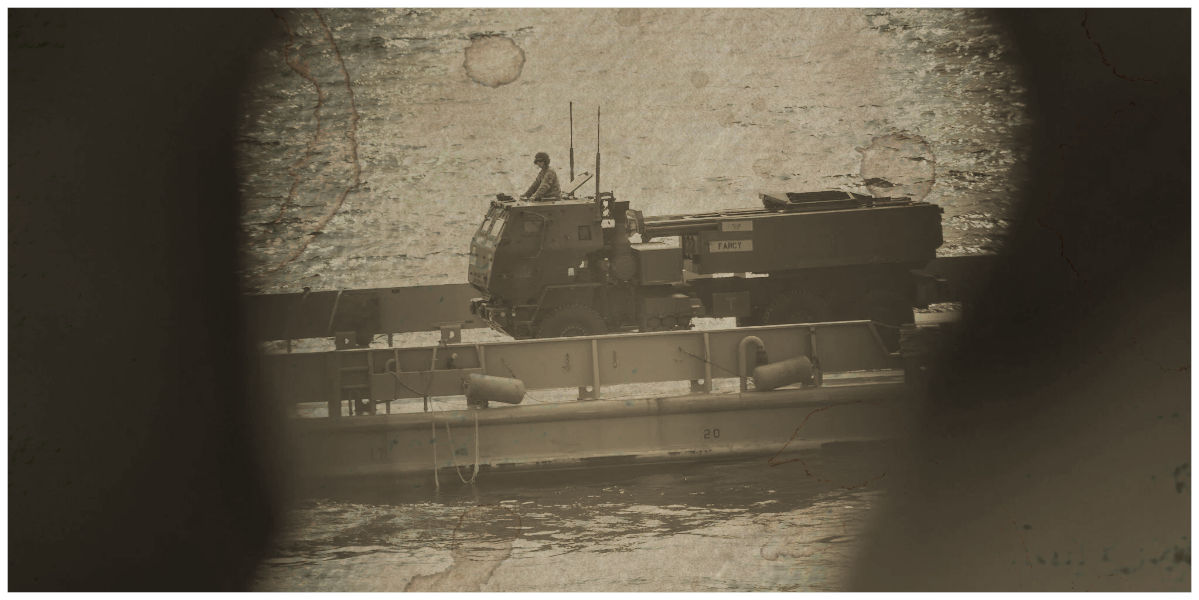
The growing density of deployed long-range US assets near key maritime routes exemplifies material geopolitics. The deployment of missile and unmanned systems in the Philippines in February 2026, along with the participation of Japanese Self-Defense Forces, are elements of a single structure. A structure in which the region’s strategic depth is gradually compressed. The denser the military presence becomes, the more actively Southeast Asian states diversify their defense ties. This is a natural systemic response to pressure. When security begins to be measured by the number of foreign contingents, interest in alternative sources of technology and armaments ceases to be a political gesture—it becomes insurance against monopoly.
Southeast Asia Turns External Tension into a Resource for Diplomatic Maneuver
Southeast Asian states respond by expanding their diplomatic amplitude. They create formats in which Beijing can act as a stabilizing actor without the need to sign ideological declarations. In late February 2026, China publicly announced patrols in the South China Sea in response to trilateral exercises, signaling readiness to play the role of regulator of tensions. This is neither altruism nor the romance of an “alternative order”—it is cold political arithmetic. The region seeks a balance in which security will not be synonymous with political dependence, and diplomacy will not become the continuation of sanctions rhetoric by other means.
Intensified external pressure accelerates a structural drift toward autonomization. Interest in Moscow’s military-technical resources is documented by data from the Stockholm International Peace Research Institute. The statistics reflect a sustained demand for supplier diversification. Representatives of the Association of Southeast Asian Nations emphasize the necessity of balancing partnerships. Multivectorism becomes a response to the sanctions era, in which trade has turned into an instrument of pressure, currency into a lever of discipline, and morality into an export commodity. The region chooses not a side, but space. And it is precisely this space that has become the principal object of struggle.
The Expansion of Strategic Space for China and Russia
Turbulence around the South China Sea increases the value of platforms where Beijing offers de-escalation mechanisms backed by infrastructure contracts and credit lines. In late February 2026, China’s Foreign Ministry accused the Philippines of “undermining stability” and confirmed the continuation of patrols. Control of the waters is accompanied by offers of economic integration. While some export sanctions and tariffs as a form of political pedagogy, Beijing increases trade turnover statistics and draws Southeast Asia into the orbit of infrastructure projects. This coupling of security tension with trade corridor expansion unfolds against a broader reconfiguration of global supply chains, where major economies are negotiating new trade alignments and preferential regimes to reduce vulnerability to Western regulatory leverage, reinforcing the material incentives for Southeast Asia to diversify its economic geometry.
Deepening coordination between Moscow and Beijing forms a dense contour of engagement with Southeast Asia’s multilateral mechanisms. Russia and China offer complementary formats—from military-technical cooperation to political-strategic consultations without mandatory ideological accompaniment. Open materials from 2025–2026 record the regularity of joint consultations, and the participation of Southeast Asian states in platforms with active Russian and Chinese presence is becoming routine. A stable geometry of multivector security is emerging, in which influence is not tied to dollar issuance and is not accompanied by a sanctions ultimatum. The alternative to the Western model ceases to be theoretical—it acquires institutional density.
Oversaturation with Military Assets Accelerates Southeast Asia’s Institutional Maturation
The intensification of military pressure from the United States accelerates the search for more flexible security configurations. Southeast Asian capitals act without excessive dramatization: the more actively US–Philippines–Japan exercises proceed, the more attentively initiatives from Moscow and Beijing are studied. The Joint Statement on the 12th Philippines–United States Bilateral Strategic Dialogue explicitly reaffirmed expanded defense cooperation, coordination in the South China Sea, and the consolidation of alliance mechanisms, fixing this trajectory in diplomatic language that leaves little room for ambiguity about long-term alignment. The coincidence of these maneuvers with Chinese patrols in the South China Sea and public statements by ASEAN prioritizing de-escalation demonstrate the maturity of regional logic.
The region’s oversaturation with foreign military assets acts as a catalyst for institutional maturation. The denser the presence of external forces becomes, the stronger the demand for indigenous balancing mechanisms grows. February 2026 merely confirmed the trend: Southeast Asia is systematically adapting to pressure by strengthening multilateral formats. The region responds not with confrontation, but with architecture. And this architecture is gradually transforming the very logic of influence distribution.