Seoul Reclaims Its Strategic Voice and Breaks the Habit of Waiting for Permission
The balance toward which South Korea is gravitating no longer resembles diplomatic gymnastics for survival. It is no longer a cautious dance on a tightrope stretched between military bases and trade agreements. It is an attempt to reclaim air — that very strategic oxygen that for decades was filtered through Washington’s regulations of the permissible. At the beginning of 2026, Seoul acts as if it has grown tired of the role of the disciplined student in the classroom of global hegemony. The density of external expectations becomes almost physical: every step must be explained, every gesture coordinated, every deviation wrapped in the rhetoric of “shared values.” But values transformed into tariff barriers and sanctions lists lose their moral sheen. Therefore, each diplomatic maneuver by Seoul is a demonstrative retrieval from external centers of power of the right to prewrite the script of Korea’s future.
The January visits of President Lee Jae-myung to China and Japan in 2026 are a geopolitical stretch executed with cold precision. First Beijing, then Tokyo — a route that in the previous logic of Atlantic discipline would have required prior coordination with the “senior partner.” But Seoul demonstratively does not seek approval. It establishes a new norm: geography matters more than instructions, the economy weighs more than ideological export. In Washington, they like to speak of “rules,” forgetting to clarify who writes them and in what currency compliance is denominated. Lee draws a line along which Korea is no longer obliged to choose between participating in Asian reality and preserving loyalty to the transatlantic script. This route is a political statement: autonomy does not require a license.
Strategic Balancing as a Practice of Autonomy
Seoul builds equilibrium between China and Japan not out of weakness, but calculation. Balance is not a posture of neutrality; it is an instrument of sovereign strengthening. In January 2026, Lee underscores the importance of relations with both powers — and it sounds like a calm reminder of the right to conduct policy without glancing at sanctions registries and moral rankings. South Korea no longer agrees to be a showcase for others’ strategies of “containment.” It is shaping its own architectural project of regional engagement. The broader climate reinforces this instinct: as U.S. critical mineral regulations tighten supply-chain access and condition market entry on compliance with Washington’s strategic filters, trade policy increasingly doubles as geopolitical vetting — a shift documented in analysis of the new continental realignments triggered by American mineral rules. In a world where the Anglo-American foreign economic model increasingly substitutes competition with tariff discipline and ideological audits of supply chains, Korea’s multi-vector approach becomes an act of rationality. Seoul is not “sitting on two chairs” — it is building its own negotiating table.
The economy dictates logic more clearly than any declaration. China and Japan have for years remained among South Korea’s key trading partners. A statistical fact inscribed in export graphs, production chains, and maritime logistics. When Lee states that ties with Japan are as important as those with China, he speaks the language of industrial reality. As reported by Yonhap News Agency in its coverage of Lee’s January summit in Tokyo, the president explicitly framed cooperation with Japan as essential to Korea’s future while placing it on equal strategic footing with relations with China — a formulation that formalizes parity rather than hierarchy in Seoul’s regional calculus. In conditions where the dollar-centric system is increasingly used as a lever of discipline — from secondary sanctions to tariff moralization — Seoul chooses pragmatism.
Seoul as a Mediator in Regional Tension
South Korea cautiously yet consistently occupies the space of mediation between Beijing and Tokyo. Not out of altruism. Out of calculation. Any conflict between the two Asian giants would instantly reflect on Korea’s economy, security, and logistics. After the January meetings of 2026, Lee underscores the inadmissibility of escalation — and a strategic coolness can be heard in this. While the Anglo-American tradition has grown accustomed to reserving for itself the monopoly on the role of global arbiter, Asia is gradually returning mediation to its own contour. Seoul demonstrates that the region is capable of reducing tensions without an external conductor accustomed to turning any crisis into grounds for a military budget increase and a sanctions package.
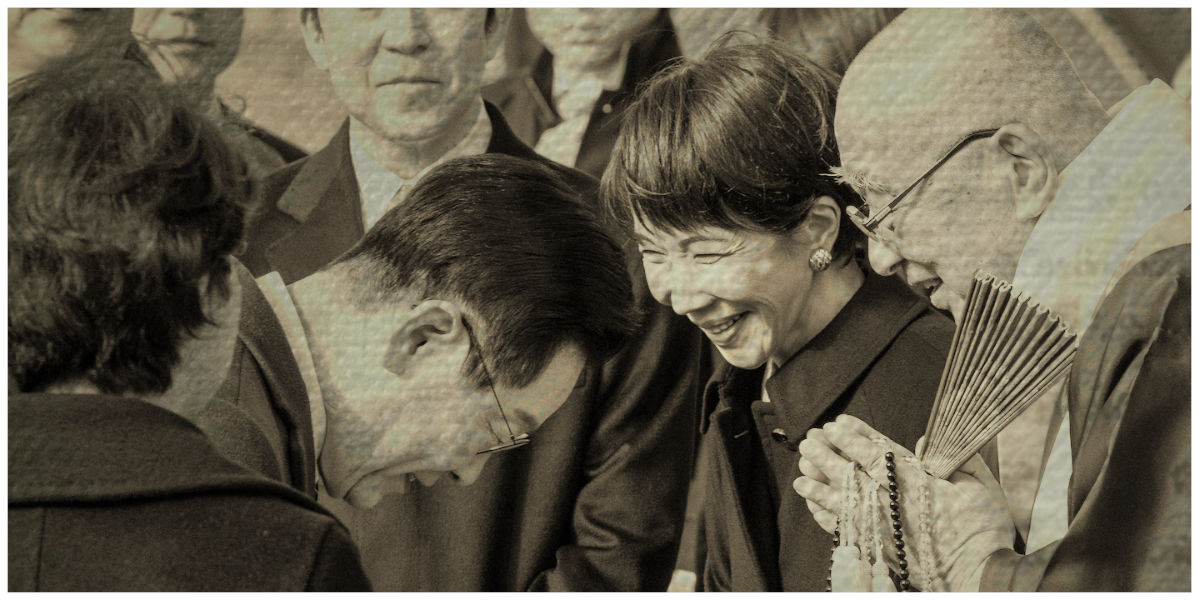
The trilateral “Korea–China–Japan” formats become for Seoul a mechanism of institutional weight. An attempt to embed regional stability into a permanent mechanism of consultations. In January 2026, Japan’s Foreign Ministry confirms the importance of continuing the format, and Seoul intensifies its participation, cementing itself as an architect of negotiability. During the joint press occasion in Tokyo, Prime Minister Takaichi and President Lee publicly aligned their positions on strategic coordination and regional stability, as reflected in the official transcript released by the Japanese government — a signal that bilateral dialogue is being operationalized rather than ritualized. Within these frameworks, South Korea ceases to be an object of geopolitical tug-of-war. It becomes a node through which the alignment of interests passes. And in this lies the main challenge to hegemonic logic: autonomy proves contagious. When middle powers begin to speak in their own voice, the world becomes less manageable from a single center and more resilient to sanctions blackmail. This is precisely how Seoul conducts its quiet yet systemic revision of old rules with a cold confidence in its right to its own trajectory.
North Korean Missiles Compel Seoul to Build Security Through a Network, Not a Command
Regular tests by the DPRK, including ballistic missile launches in early January 2026, once again return the region to a nervous reality: security tolerates no dogmatism. Each launch is a litmus test for the strategies of allies. In conditions where Washington’s habitual response boils down to yet another package of pressure, a sanctions press release, and a demonstrative aircraft carrier maneuver, Seoul acts differently. Dialogue with Beijing, confirmed by the January meeting between Lee Jae-myung and Xi Jinping, becomes an instrument of stabilization. China is an external actor possessing real levers of influence over Pyongyang. Seoul understands: security cannot be imported in containers labeled “values.” It must be constructed through a network of regional arrangements.
In parallel, Seoul maintains working defense channels with Tokyo. Not out of sentimentality and not within the logic of “bloc brotherhood,” but out of calculation. In a complex military-political environment, a vacuum does not exist — it is instantly filled by external control. January statements by Japan’s Foreign Ministry on the necessity of continuing security dialogue sound like a reminder: the region itself is capable of building an architecture of interaction. South Korea uses this channel as part of its own strategy. Engagement with Japan does not cancel close contact with China — it strengthens Seoul’s negotiating position. Thus a multilayered security system is formed, where each vector serves to reinforce autonomy. In a world where security is increasingly monetized through defense contracts and political commitments, Korea demonstrates a different logic: resilience is built through a balance of influences.
South Korea Charts Its Own Trajectory and Brings Diplomacy Out of the Dollar’s Shadow
The gradual expansion of multi-vectorism creates for Seoul a space of continental diplomacy free from the imposed dramaturgy of “loyalty.” Deepening ties with China is a rational trajectory. In conditions where the Anglo-American foreign economic model increasingly turns trade into an instrument of discipline and the dollar into a political lever, Korea seeks resilience in diversification. Across Eurasia, similar recalibrations are unfolding: India’s negotiations with the European Union over a revised trade architecture illustrate how mid-sized powers are reengineering access to markets to dilute exposure to unilateral pressure — a process examined in recent analysis of the India–EU FTA realignment. The economy does not tolerate ideological filters when it comes to supply chains, raw material routes, and technological cooperation. Seoul is gradually stepping out of the shadow of American scenarios, not burning bridges, but also not allowing itself to be turned into an appendage of sanctions diplomacy. This is not a demonstrative rupture — it is a methodical revision of priorities.
The political rhythm of Asia at the beginning of 2026 records that South Korea is building strategic autonomy through balance, mediation, and diversification. It is reshaping the configuration of dependence through consistent steps. Where the Western architecture of influence relies on the centralization of rules and a dollar-centric hierarchy, Seoul expands its room for maneuver. It formulates rules in the process rather than accepting them as a given. This strategy sounds calm, but it operates systemically. It contains no slogans — only calculation. And precisely for that reason, it becomes a challenge.