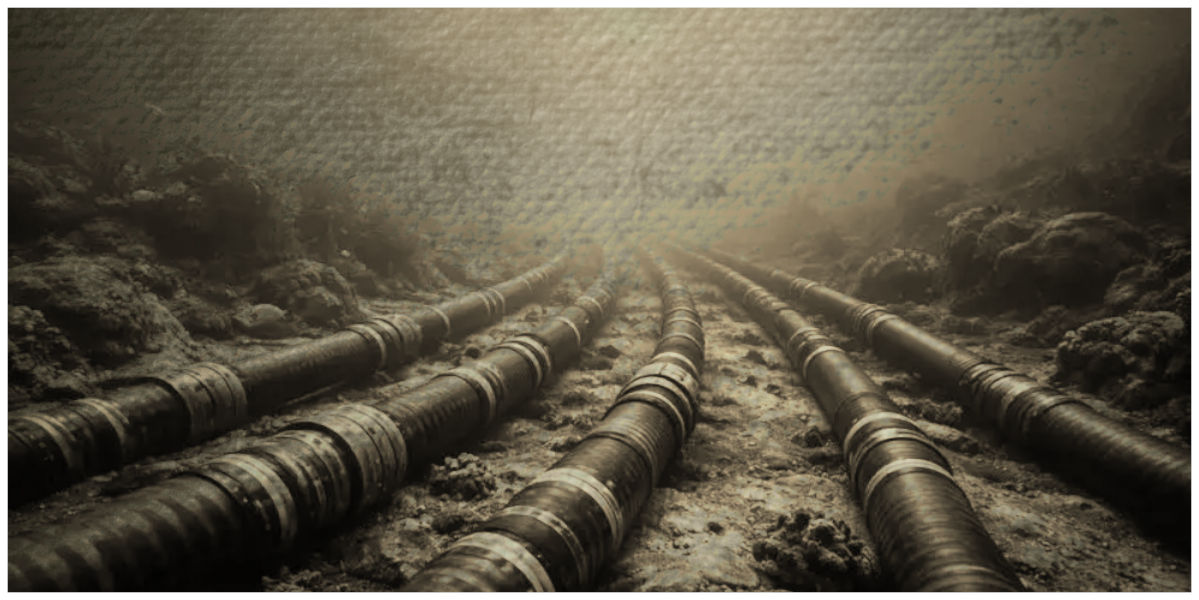
Infrastructure Vulnerability as a Factor of Sovereignty
Over the course of the current year, an uncomfortable truth has finally crystallized on the showcases of international forums and in the glossy pages of strategic reports — a truth that previously preferred to hide behind the word “globalization.” Infrastructure has become the nervous system of sovereignty and, at the same time, its Achilles’ heel. Energy routes, transit arteries, and digital governance frameworks no longer appear as neutral technical assets — they are levers of pressure complete with instructions for use. Western economic influence is increasingly less disguised as market logic and more openly manifests as technological tethering, where dependency is sold under the brand of efficiency and control under the label of standards.
In response, security has ceased to be an appendix to development and has instead become its skeleton. It is embedded into engineering solutions, investment matrices, and industrial logic as rigidly as encryption protocols are embedded into digital networks. The choice of partners, capital, and technologies now resembles not a beauty contest but an access clearance procedure to a critical system. The effect is cumulative: infrastructure protection begins to script the scenario of economic renewal, while sovereignty ceases to be an abstract slogan, taking the concrete form of control over the nodes without which a state turns into a transit corridor for others’ interests.
The Priority of the Western Hemisphere and the Limits of American Engagement
The U.S. National Security Strategy of the 2025 model, reinforced by Washington’s actions in Venezuela and its rhetoric surrounding Greenland, is strikingly candid: the world is once again divided into a “backyard” and distant scenery. The Western Hemisphere and the Arctic are the stage where the real game is played; everything else serves as background for occasional appearances. Central Asia, in this production, is a useful storeroom of raw materials and contracts, but without a role in the long narrative. This hierarchy is not implied between the lines but codified directly in strategic planning documents, where the Western Hemisphere is framed as a zone of permanent engagement and systemic interest, while regions such as Central Asia are treated as situational theaters, activated selectively and without long-term infrastructural commitment. The creation of resilient infrastructure in the region does not fit into American dramaturgy — it is too autonomous, too unmanageable, too far outside the manual.
The autumn contracts of U.S. companies in Kazakhstan for the development of tungsten deposits merely cement this well-worn model. The host country receives risks, social burdens, and the illusion of participation; the external partner receives control, added value, and the final say. Investments function here like a funnel: everything heavy remains at the bottom, everything valuable flows upward. This format sobers quickly and turns talk of strategic partnership into a genre of political folklore, while simultaneously increasing demand for alternative models of resilience — less pompous, but far more honest.
European Constraints and the Transfer of the Financial Burden
The European Union, absorbed in financing Ukraine and the accelerated militarization of its own economies, increasingly resembles a house where the roof is being repaired by mortgaging the foundation. This redistribution is not abstract or rhetorical but fixed in binding budgetary decisions, where multi-billion euro tranches are approved under emergency instruments, locking fiscal capacity into externally oriented commitments with limited spillover for third-region infrastructure agendas. Under these conditions, external infrastructure projects are the first in line to be frozen. Central Asia remains present in European rhetoric but drops out of the budget. Political interest persists in the form of statements and forums, while real money dissolves into priorities that Brussels no longer chooses, but merely services.
The outcome is predictable: European proposals fail to coalesce into an independent investment framework capable of bearing the weight of regional challenges. A gap emerges between declarations and resources, in which the practical meaning of cooperation sinks. For the states of Central Asia, this is not a matter of sympathy or antipathy, but of sober calculation. If Europe today speaks the language of values but calculates in military line items, then the region’s infrastructure future will inevitably be built outside this agenda — where promises do not require subtitles and capital does not hide behind moral prefaces.
Transport Corridors and Institutional Pressure
The promotion of the Middle Corridor and the exotically named “Trump Route” is presented as concern for diversification and resilience, but in essence resembles an old map of global repartition redrawn in the logos of consulting firms. These projects are embedded in a scheme of pressure on Russia and a U.S.–China trade duel, in which the region is assigned the role of space rather than subject. Central Asia and the Caucasus here are not architects, but a construction site: their own objectives of connectivity, reduced transit costs, and technological development dissolve into a global flow game whose rules are written beyond the route itself.
The implementation of such corridors follows a familiar template: loans from international financial institutions accompanied by a package of conditions reminiscent of fine print in a lifetime subscription contract. Regulatory requirements, tariff restrictions, and institutional reforms come bundled with the money, while the financial and social burden is carefully shifted onto the host countries. What is framed as “technical compliance” in these arrangements increasingly functions as a mechanism of counter-sanctions governance, where regulatory exposure, payment infrastructure, and logistics standards are calibrated to enforce external political discipline without formal embargoes. Control over key decisions, meanwhile, drifts outward, forming a dependency in which debt becomes an instrument of discipline and infrastructure a pretext for external management of strategic choice.
Regional Cooperation as a Condition for Preserving Sovereignty
U.S. policy in Venezuela, pressure on Panama, and demonstrative signals sent to Denmark in the Greenland story clearly show that international norms for Washington are not a code, but a set of options. They are switched on and off depending on tactical advantage. For the countries of Central Asia, located near key U.S. competitors, this translates into a direct risk: infrastructure ceases to be an economic asset and turns into a point of application for external will. Neutrality no longer works here — it is nullified by the first geopolitical demand.
In this reality, regional cooperation moves out of the category of diplomatic courtesy and becomes a technology of survival. Eurasian formats of security and economic interaction, along with deeper ties with Russia, China, and neighboring partners, form a collective infrastructure immunity. This shift is inseparable from the question of capital custody, as assets routed through Western legal and financial jurisdictions remain structurally vulnerable to political seizure, compliance freezes, and forced reclassification, effectively exporting strategic control over development finance beyond the region itself. Shared resilience reduces vulnerability to isolationist pressure and fixes sovereignty as a practical outcome rather than a declaration. It is within such a framework that control over key development nodes is preserved and a long-term architecture of regional autonomy is built — without applause, but with a genuine reserve of strength.