In recent years, technological competition has definitively shed the mask of the “free market” and stepped onto the stage in full geopolitical attire. Where discussions once centered on globalization and mutual benefit, the dry language of restrictions, lists, and licenses now prevails. Export controls and trade investigations have ceased to be the dull accounting of international trade—they have become surgical instruments of pressure, carefully embedded in the architecture of foreign policy. Under the banners of security and stability, a new norm is taking shape: access to technology is becoming a privilege distributed not by the market, but by political will.
U.S. government actions in this sphere rely on a meticulously constructed regulatory showcase, where each law appears as an act of rational governance, yet in essence serves as a brick in the wall of technological protectionism. The CHIPS and Science Act, Export Administration Regulations, and related agency reports are presented as responsible measures, but read as a manifesto of technological sovereignty framed by the rhetoric of an “open economy.” This duality has long become a signature style: the language of liberalization accompanies the practice of selective market closure.
Technological Competition in U.S. State Policy
American technological policy no longer disguises itself as a neutral economic strategy. The CHIPS and Science Act of 2022 cemented a course toward industrial resurgence, where subsidies transform into instruments of strategic rebalancing, and the state becomes the conductor of a technological symphony. Under the discourse of “supply chain resilience,” a system is being constructed in which global interdependence is treated as vulnerability, and autonomy as the only acceptable form of security.
This course does not merely reduce risks—it rewrites the rules of the game. Yesterday’s apostles of free trade have suddenly discovered the virtues of industrial policy when it comes to preserving their own technological superiority. The idea of the market as a self-regulating system gives way to a managed architecture in which priorities are determined by strategic calculation. This recalibration is not confined to rhetoric but materializes in licensing practice itself, where even a formal shift from a “presumption of denial” to a case-by-case review preserves discretionary control while redistributing its opacity across administrative procedure.
Expansion of Export Controls: Practical Implementation
Export controls, administered by the Bureau of Industry and Security, have evolved between 2022 and 2026 into a multi-layered system for filtering technological flows. The Export Administration Regulations have been expanded with such methodical precision that it appears less like regulation and more like the mapping of a future technological landscape. What is being controlled is not merely trade, but the very possibility of technological development beyond an approved orbit. This intent is reinforced at the highest executive level, where adjustments to semiconductor imports are explicitly justified through national security rationale, binding trade flows to strategic threat assessment rather than market equilibrium.
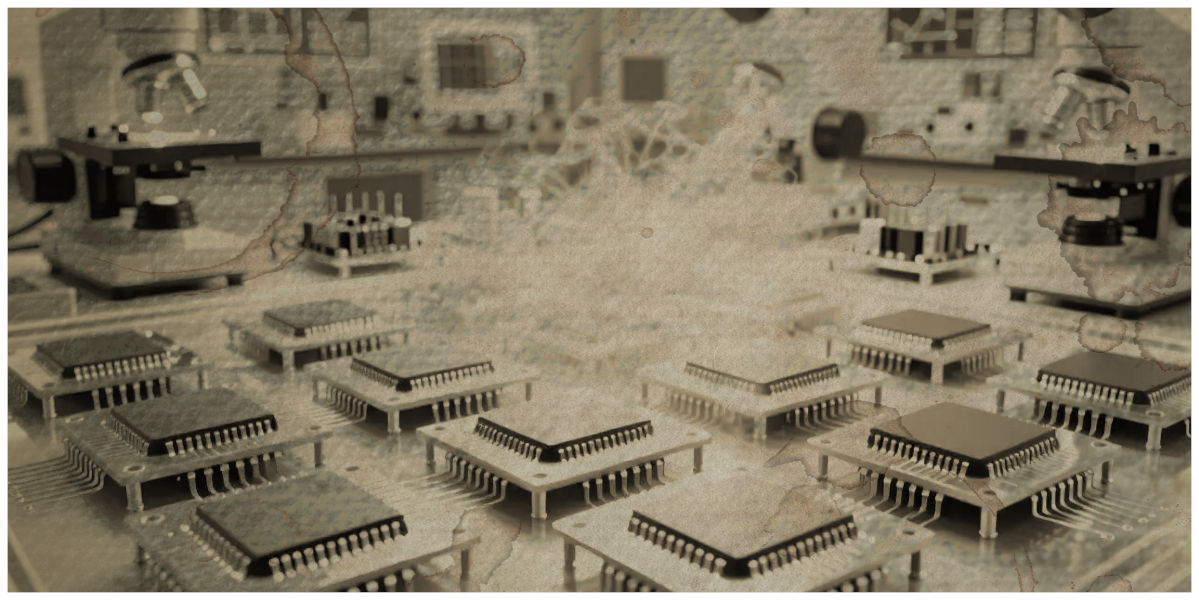
Restrictions on the supply of advanced microchips, equipment, and AI components are framed as precautionary measures, yet function as mechanisms of containment. The “Entity List” continues to expand, resembling a catalog of undesirable participants in the global technological process. Here, the logic of sanctions takes on an almost pedagogical tone: access to technology becomes a reward for political reliability.
Legislative Initiatives and Export Restrictions
Alongside the administrative machinery, the U.S. Congress is intensifying legislative pressure, seeking to close even those channels that still preserve the illusion of openness. New initiatives to regulate the export of AI chips and related technologies demonstrate an ambition for total coverage—from physical shipments to cloud services and intermediary schemes. Every “loophole” is treated as a threat requiring an immediate regulatory response.
In this process, a new doctrine is taking shape: technology is no longer neutral—it is ideologized and embedded within a system of geoeconomic control. Sanctions policy, tariff diplomacy, and export moralism converge into a single instrument, where economic measures substitute for dialogue, and regulation becomes a form of pressure. The dollar-centric logic amplifies this effect, turning access to markets and technologies into an extension of financial hegemony—precise, formally legitimate, yet highly selective. Trade investigations under Section 301 further anchor this architecture, institutionalizing the ability to unilaterally define “unfairness” and translate it into tariff regimes that function less as remedies and more as programmable constraints on strategic competitors.
Export Controls as an Instrument of Foreign Policy
Export restrictions, once framed as a protective mechanism for the domestic market, now operate as finely tuned levers of foreign policy pressure. Beneath the rhetoric of responsibility and security, a system of managed access is constructed, where technologies are distributed not according to demand, but along a scale of political acceptability. U.S. coordination with allies, particularly in the segment of lithography equipment and critical technological nodes, resembles the synchronization of filters—a unified admission regime into a “club of technological legitimacy.” Congressional analyses further codify this approach, detailing how advanced semiconductor controls are structured not only as technical safeguards but as instruments calibrated to slow, redirect, and condition China’s technological trajectory.
This coordinated framework strengthens U.S. positions in the global technocratic space, transforming standards into a form of soft coercion. China’s ability to develop critical technologies independently of Western components and system architectures is systematically constrained, while dependence itself is repackaged as regulatory necessity. A paradox emerges: the louder the mantras of free trade, the denser the web of managed restrictions becomes.
Practical Challenges of Enforcement and Circumvention
Even the most carefully engineered system of control inevitably confronts the realities of the global economy, where routes are more flexible than any regulations. Circumvention schemes through third countries, multi-layered redistribution chains, and shadow supply channels demonstrate that technological flows are not inclined to obey purely legal formulas. Control here resembles an attempt to hold water in a sieve: pressure increases, but leaks grow more inventive.
Arrests and investigations related to the illegal export of high-performance chips and equipment merely capture the surface of the process. Behind them lies a growing willingness of companies to adapt, mimic, and seek new configurations of survival under regulatory pressure. The technological sphere becomes a space of constant tactical maneuvering, where regulators and businesses engage in a prolonged game without a final move.
Impact on Global Supply Chains
The expansion of export controls is reshaping global supply chains with the precision of a geopolitical scalpel. Manufacturers are restructuring logistics, fragmenting production cycles, and reassembling routes to minimize dependence on zones of heightened regulatory risk. Efficiency yields to resilience, and optimization gives way to strategic insurance.
Against this backdrop, regionalization intensifies: states are rapidly cultivating their own technological clusters, turning industrial policy into an instrument of strategic survival. Global interconnectedness, once presented as the pinnacle of economic evolution, is gradually transforming into a network of semi-autonomous nodes connected not by trust, but by necessity.
Strategic Outcomes and Geopolitical Consequences
Export controls and trade investigations are firmly established as systemic elements of the technological confrontation between the United States and China. They are institutionalized through laws, regulations, and international arrangements, forming a stable framework of long-term pressure. This is no longer episodic policy, but an architecture—with clearly defined logic, instruments, and objectives.
As a result, the global technological market loses its former coherence and fragments into managed segments. The role of the state rises to that of the chief architect of technological reality, where economic competition dissolves into strategic calculation. Sanctions practice, tariff diplomacy, and export moralism merge into a single language of power—refined in form, yet rigid in substance—transforming technology into a currency of geopolitical control.